

Views: 0 Author: Site Editor Publish Time: 2025-11-25 Origin: Site


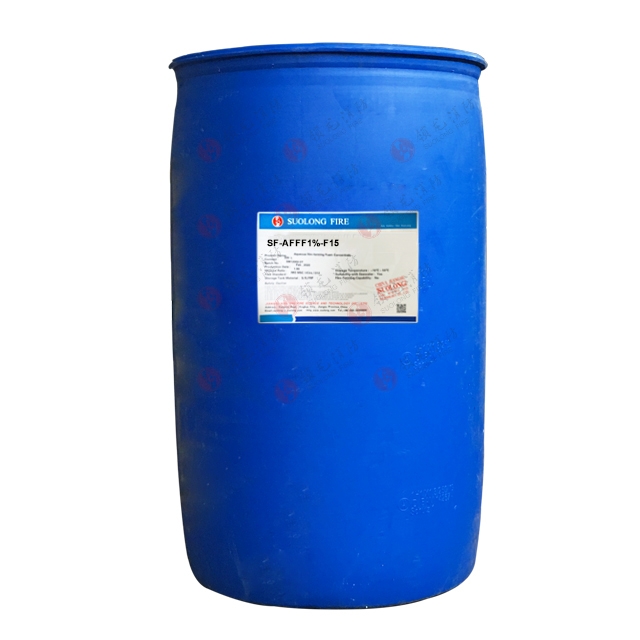
In the high-stakes world of industrial and municipal firefighting, victory is not just about the volume of water or the speed of the response; it is about precision. The nature of a fire is dictated by its fuel source, and using a one-size-fits-all approach to suppression is not only inefficient but can be dangerously counterproductive. A fuel spill on a highway behaves fundamentally differently from a chemical leak in a manufacturing plant, and each demands a tailored tactical response. At the heart of this tactical response lies the critical choice of firefighting foam. Selecting the correct agent is a science-based decision that can mean the difference between a quickly controlled incident and a catastrophic, uncontrolled blaze.
Effectively matching a foam to a fuel requires understanding the fundamental chemical properties of the fuel, primarily classifying it as either a hydrocarbon or a polar solvent, and then selecting a foam concentrate with the specific performance characteristics needed to safely and rapidly extinguish that type of fire.
This article serves as a definitive guide to this critical decision-making process. We will move beyond simple definitions to explore the science behind fuel classifications, dissect the unique properties of different foam families, and provide a clear framework for making the right match. We will pay special attention to the role of traditional, time-tested agents like Protein firefighting foam, examining its unique strengths and ideal applications. By the end of this guide, safety professionals, fire chiefs, and procurement officers will be equipped with the knowledge to make strategic, informed choices that enhance safety, protect assets, and ensure operational readiness.
Why is Matching the Right Foam to the Fuel a Critical Decision?
What Are the Primary Fuel Classifications in Firefighting?
An Overview of Modern Firefighting Foam Concentrates
How to Match Foam to Hydrocarbon Fuels?
The Role of Protein Firefighting Foam in Hydrocarbon Fires
How to Match Foam to Polar Solvent (Alcohol) Fires?
What are the Practical Considerations for Foam Selection?
Conclusion: A Strategic Approach to Foam Selection
Matching the right foam to the fuel is critically important because using the incorrect foam can be completely ineffective, can actually worsen the fire by spreading the fuel, and can place firefighters in significantly greater danger, whereas the correct foam ensures rapid, safe extinguishment.
The consequences of a mismatch are severe and multifaceted. At its most basic level, using the wrong type of foam simply will not work. The most common and dangerous example of this is attempting to fight a polar solvent fire, such as an alcohol blaze, with a standard foam designed for hydrocarbons. The solvent’s chemical affinity for water will cause it to actively break down the foam’s bubble structure. Instead of forming a protective blanket, the foam dissolves into the fuel, rendering it useless and wasting precious time and resources. The fire continues to burn unabated while firefighters expend their limited supply of an ineffective agent.
Beyond mere ineffectiveness, the wrong application can actively exacerbate the situation. Applying a heavy stream of water or an improperly applied foam onto a liquid fuel fire can splash and agitate the burning liquid, splattering it over a wider area. This dramatically increases the surface area of the fire, turning a manageable spill into a rapidly expanding inferno. This not only increases the threat to property but also creates a much larger and more unpredictable hazard for the emergency response team, potentially cutting off escape routes and endangering personnel.
Finally, the choice of foam has a direct and immediate impact on firefighter safety. An ineffective agent means crews must remain in the hot zone for a longer period, increasing their exposure to radiant heat, toxic combustion byproducts, and the risk of catastrophic events like a flashover or a boilover in a storage tank. The correct foam, applied correctly, achieves rapid knockdown, reduces heat levels, and creates a stable, secure environment. This allows firefighters to transition from an offensive attack to a defensive overhaul posture much more quickly, fundamentally improving the safety and outcome of the entire operation.
In firefighting, fuels are primarily classified into two broad categories: hydrocarbons, which include substances like gasoline, diesel, and crude oil, and polar solvents, which include alcohols, ketones, and other water-miscible liquids.
Understanding this fundamental division is the bedrock of effective foam selection. The classification is based on the fuel’s chemical relationship with water, which directly dictates how a foam blanket will interact with it.
Hydrocarbon Fuels: These are organic compounds consisting entirely of hydrogen and carbon atoms. Their defining characteristic in the context of firefighting is that they are immiscible with water; they do not mix. When water or a standard foam is applied to a hydrocarbon fire, the agent floats on the surface. This property is what allows a foam blanket to effectively smother the fire by forming a continuous layer that separates the fuel from the oxygen in the air. Common examples of hydrocarbon fuels that firefighters encounter are gasoline, diesel fuel, jet fuel, kerosene, motor oil, and crude oil. Fires involving these materials are the most common type of Class B fire.
Polar Solvent Fuels: These are chemical compounds, such as alcohols (methanol, ethanol), ketones (acetone), esters, and other organic liquids, that are miscible with water. Their molecular structure gives them a polarity that allows them to dissolve in water. This property creates a significant challenge for firefighting foams. When a standard foam is applied to a polar solvent fire, the solvent acts as a solvent for the water in the foam, causing the bubble structure to collapse almost instantly. The foam blanket disintegrates, leaving the fuel exposed and the fire burning. These fires require a special type of foam designed to resist this destructive effect.
To clarify the distinction, consider the following comparison:
| Characteristic | Hydrocarbon Fuels | Polar Solvent Fuels |
|---|---|---|
| Chemical Nature | Non-polar molecules | Polar molecules |
| Water Miscibility | Immiscible (does not mix) | Miscible (mixes easily) |
| Interaction with Foam | Foam floats and forms a blanket | Foam dissolves and breaks down |
| Common Examples | Gasoline, Diesel, Crude Oil | Alcohol, Acetone, Ketones |
| Foam Requirement | Standard Class B Foam | Alcohol-Resistant (AR) Foam |
Modern firefighting foam concentrates are broadly categorized into Class A foams for ordinary combustibles and Class B foams for flammable liquids, with Class B foams including Aqueous Film Forming Foam (AFFF), Fluoroprotein Foam (FFFP), and the traditional, highly reliable Protein firefighting foam.
While this article focuses on Class B fires, it is useful to understand the full spectrum of foam agents. Each is engineered with specific properties to tackle different fire challenges.
Class A Foam: This agent is not designed for liquid fuels. Instead, it is a surfactant-based concentrate used to enhance the effectiveness of water on Class A fires (wood, paper, brush, trash). It reduces the surface tension of water, allowing it to penetrate deeper into the fuel source, resulting in faster extinguishment and reduced water damage.
Class B Foam: This is the category for flammable liquid fires, and it is where the critical matching of foam to fuel occurs. The primary types are:
Aqueous Film Forming Foam (AFFF): This is a synthetic foam that contains fluorinated surfactants. Its key feature is its ability to form a thin, aqueous film on the surface of a hydrocarbon fuel that floats ahead of the foam blanket. This film provides rapid vapor suppression, leading to very fast fire knockdown.
Fluoroprotein Foam (FFFP): This is a hybrid agent that combines the properties of protein foam and AFFF. It starts with a Protein firefighting foam base and adds fluorinated surfactants. This gives it the excellent heat resistance and burnback protection of protein foam, along with the faster knockdown speed of a film-forming agent.
Protein Firefighting Foam (FP): This is the original modern firefighting foam. It is created from natural proteins and does not form a film. Its extinguishing power comes from its ability to generate a thick, cohesive, and extremely stable foam blanket that is highly resistant to heat and fuel pickup.
Each of these foams represents a different approach to solving the problem of a liquid fire, with varying strengths in terms of speed, durability, and environmental impact. The choice between them depends entirely on the specific fuel and the operational context.
For hydrocarbon fuels, effective choices include AFFF, FFFP, and Protein firefighting foam, with the selection depending on factors like required knockdown speed, the need for thermal protection, budget, and environmental considerations.
Because hydrocarbon fuels are immiscible with water, they are generally more straightforward to fight than polar solvent fires. The primary goal is to create a stable, floating blanket that suffocates the fire and cools the fuel. All three major Class B foam types—AFFF, FFFFP, and Protein firefighting foam—are designed to do this, but they achieve it with different performance characteristics.
Aqueous Film Forming Foam (AFFF) is often the choice when speed is the absolute priority. The aqueous film it forms on the fuel surface acts almost instantly to seal off vapors, achieving a very rapid knockdown. This makes it ideal for applications like aircraft rescue and firefighting (ARFF), where stopping the fire within seconds is critical to save lives, or for small-to-medium fuel spills where a fast attack can prevent escalation.
Fluoroprotein Foam (FFFP) offers a balanced performance profile. It provides faster knockdown than traditional protein foam due to its film-forming capability, but it retains the superior heat resistance and burnback protection of its protein base. This makes it a versatile and popular choice for industrial settings like refineries, petrochemical plants, and fuel storage facilities, where both quick action and long-term security against re-ignition are important.
Protein Firefighting Foam is the specialist for large, deep-seated, or high-heat-release fires. Its primary advantage is not speed, but durability. The foam blanket produced by Protein firefighting foam is thick, viscous, and incredibly resistant to thermal degradation and burnback. In a massive storage tank fire, where the heat intensity is extreme and the risk of re-ignition is high, the robust and long-lasting seal provided by a protein blanket can be more valuable than the initial speed of an AFFF application. Its proven reliability under the most severe conditions makes it a mainstay in high-risk industrial environments.
The role of Protein firefighting foam in hydrocarbon fires is to provide an exceptionally durable, heat-resistant, and long-lasting foam blanket that offers superior burnback protection, making it the ideal choice for large-scale, high-risk industrial fires.
Protein firefighting foam operates on a simple yet powerful principle: overwhelming the fire with a robust physical barrier. Unlike AFFF, which relies on a sophisticated chemical film, protein foam’s strength lies in the physical quality of the foam blanket itself. Made from hydrolyzed natural proteins, the resulting foam has a thick, almost gelatinous consistency. This structure gives it a high viscosity, which allows it to cling to vertical surfaces and resist being washed away or broken down by the heat of the fire.
The most significant advantage of Protein firefighting foam is its outstanding burnback resistance. Burnback occurs when the intense heat of a fire is sufficient to vaporize the water in a foam blanket faster than it is being applied, causing the foam to break down and the fire to re-ignite. The dense, stable bubble structure of a protein foam blanket acts as an excellent insulator, significantly slowing down heat transfer to the water within. This allows the blanket to maintain its integrity for extended periods, even under direct exposure to intense flame. This quality provides a critical safety margin for firefighters, securing the fire scene and preventing dangerous flare-ups while crews work to cool surrounding structures and secure the fuel source.
This makes Protein firefighting foam the agent of choice for the most challenging scenarios. Imagine a large, open-top storage tank fully involved in fire. An AFFF blanket might be knocked down by wind or rapidly degraded by the immense heat, requiring constant re-application. A protein blanket, while taking longer to initially cover the surface, will form a much more secure and durable seal. It is this reliability and steadfastness in the face of extreme conditions that has cemented the role of Protein firefighting foam as a cornerstone of industrial fire protection, particularly for high-hazard bulk fuel storage.
For polar solvent (alcohol) fires, it is mandatory to use an alcohol-resistant foam, such as AR-AFFF or AR-FFFP, because these foams contain special polymers that create a protective barrier between the foam and the water-miscible fuel.
Fighting a polar solvent fire requires a completely different technological approach. As established, standard foams are destroyed by these water-soluble fuels. The solution is to use an Alcohol-Resistant (AR) foam. These specialized concentrates contain an additional component: a water-soluble polymer. This polymer is the key to their effectiveness.
When an AR foam is applied to a polar solvent fire, the polymer in the foam solution reacts with the fuel. It precipitates out of the solution and forms a thin, tough, plastic-like film or membrane between the fuel surface and the water content of the foam blanket. This polymer film is impervious to the solvent; it acts as a shield, preventing the fuel from dissolving the foam’s water and breaking down its bubble structure. With this protective layer in place, the foam blanket can then form and function as it would on a hydrocarbon fire, smothering the flames and cooling the fuel.
There are two primary types of AR foams:
Alcohol-Resistant AFFF (AR-AFFF): This combines the film-forming technology of AFFF with the protective polymer membrane, offering both rapid knockdown and solvent resistance.
Alcohol-Resistant FFFP (AR-FFFP): This combines the robust blanket of Fluoroprotein foam with the polymer membrane, providing excellent burnback protection in addition to solvent resistance.
Using a standard foam on an alcohol fire is not just ineffective; it is a dangerous mistake. The apparent initial application of foam can provide a false sense of security before the blanket rapidly dissolves, leading to a sudden and potentially explosive flare-up. Therefore, any facility that handles, stores, or transports polar solvents, such as distilleries, pharmaceutical plants, and chemical manufacturers, must be equipped with AR-compatible foam systems and trained in their use.
Practical considerations for foam selection include conducting a thorough risk analysis of the facility, evaluating budget constraints against performance, ensuring equipment compatibility, and adhering to environmental regulations, particularly concerning PFAS chemicals.
Beyond the technical matching of foam to fuel, the final decision must be grounded in the practical realities of the organization. A holistic approach ensures that the chosen solution is not only effective in theory but also viable in practice.
Risk Analysis: The first step is a comprehensive assessment of the specific hazards present. What fuels are on-site? In what quantities? What are the potential fire scenarios? A facility with large volumes of jet fuel will have different needs than a small workshop with containers of isopropyl alcohol. This analysis forms the foundation for the foam selection process, defining the required performance characteristics.
Budget and Environmental Impact: Cost is always a factor. Synthetic foams like AFFF are typically more expensive than traditional Protein firefighting foam. However, the environmental equation is now a major part of the total cost of ownership. AFFF and FFFFP contain PFAS (per- and polyfluoroalkyl substances), persistent “forever chemicals” that are facing increasing regulatory scrutiny and phase-out mandates. This has led to a surge in the development of Fluorine-Free Foams (F3). In this context, traditional Protein firefighting foam is often viewed as a more environmentally benign alternative compared to PFAS foams, though its impact on aquatic life must still be managed. The decision now balances performance, upfront cost, and long-term environmental liability.
Equipment Compatibility and Training: The best foam is useless if the existing infrastructure cannot deploy it correctly. The proportioning systems, pumps, hoses, and nozzles on a fire truck or in a fixed system must be compatible with the chosen concentrate. Furthermore, crews must be thoroughly trained. They need to understand the correct application techniques, such as the gentle application needed for Protein firefighting foam, and the specific procedures for handling different agents. Ongoing training and drills are essential to ensure that the investment in the right foam translates into effective emergency response.
The choice of firefighting foam is a far more nuanced decision than it first appears. It is a strategic exercise in risk management that demands a deep understanding of both the threat and the tools available to counter it. The fundamental principle remains: the foam must be matched to the fuel. A failure to respect the chemical differences between hydrocarbons and polar solvents invites disaster, while a correct application leverages the laws of chemistry to achieve rapid and safe fire control.
From the rapid knockdown of AFFF to the steadfast durability of Protein firefighting foam and the specialized protection of AR foams, each agent has a distinct and vital role to play. The enduring relevance of Protein firefighting foam, in particular, highlights that in the quest for new technology, we should not overlook the proven reliability of established solutions, especially in the most high-risk industrial environments. As the industry moves towards more environmentally sustainable fluorine-free alternatives, the core principles of foam application and fuel matching will remain unchanged.
Ultimately, a well-informed foam selection strategy, supported by robust training and maintenance, is an investment in safety, resilience, and operational excellence. It empowers firefighters and safety professionals with the right tool for the job, ensuring that when a fire ignites, the response is not just a reaction, but a precise and effective countermeasure.